Deep Plane Facelift: Table of Contents

What is a deep plane facelift?

Are you looking for a complete facial rejuvenation that lasts for years? The deep plane facelift is the most extensive and advanced procedure during which a surgeon carefully manipulates the ligaments and soft tissue of the face to produce a youthful, natural look. This type of facelift is ideal for those who show significant signs of aging, as it allows for the greatest deal of correction to the mid and lower face. Because the procedure involves anatomy unique to this procedure, not encountered or manipulated in other types of operations, it should be performed by a surgeon who has extensive knowledge of this anatomy and experience with this operation. Experience and meticulous attention to detail are an absolute must.

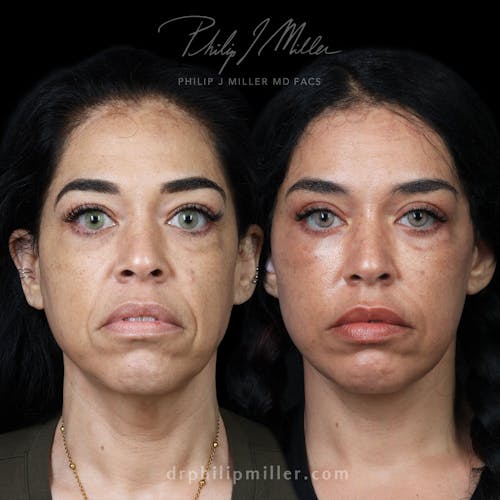
Middle aged woman with curly black hair looking forwards.

A comprehensive approach

Deep plane facelifts manipulate all layers of the SMAS, or the superficial muscular aponeurotic system. The SMAS is the middle layer of the face under the skin and comprises muscle and soft tissue of the face. 

Many plastic surgeons perform facelifts by manipulating only a portion of this layer. However, during a deep plane facelift, the surgeon dissects the entire SMAS layer, both the superficial and deep SMAS, and is thus able to  perform a more extensive redraping of the layers, creating greater contour enhancements with longer-lasting results. Additionally, the SMAS and the skin are lifted together, which is why the results look so natural.

How is a deep plane facelift performed?

To undergo a deep plane facelift in New Orleans, patients are put under general anesthesia. First, Dr. Miller makes discreet incisions behind the hairline and around the ears. Then, he lifts the skin off the face followed by a “composite flap of skin and SMAS” and surgically releases select ligaments underneath.

The SMAS and skin are then repositioned and suspended upwards, which results in a cleaner, contoured cheek, neck, and jawline. Afterward, the incisions are closed with sutures. The whole procedure can take around 4 hours, though the length varies depending on the level of correction desired.

Banner media

What is recovery like after a deep plane facelift in New Orleans?

The patient will remain in our clinic for observation for an hour after surgery. Then a relative, friend, or medical aide should accompany the patient home. Swelling, numbness, tenderness, and bruising are expected but should significantly reduce in 7-10 days. Pain medication is prescribed to ease discomfort during the first few days, and over-the-counter pain relievers are suitable after that.

The patient will have to wear a head dressing after the surgery. Some need to be outfitted with draining tubes to eliminate any postoperative fluid in the area. Sleeping in a semi-upright position is recommended, as is the use of cold compresses to ease swelling.

Before & After

View Gallery

A week after surgery

Following a deep plane facelift in New Orleans with Dr. Philip Miller, patients will be able to return to their desk jobs and light social activities about 7 days after surgery. Many use makeup or hair to camouflage signs of surgery. Walking is encouraged to stimulate blood flow, but strenuous exercise should be avoided until Dr. Miller gives his approval. Each patient will be scheduled for multiple follow-up visits so Dr. Miller can ensure that healing is progressing well.

An elegant, contoured, and youthful face

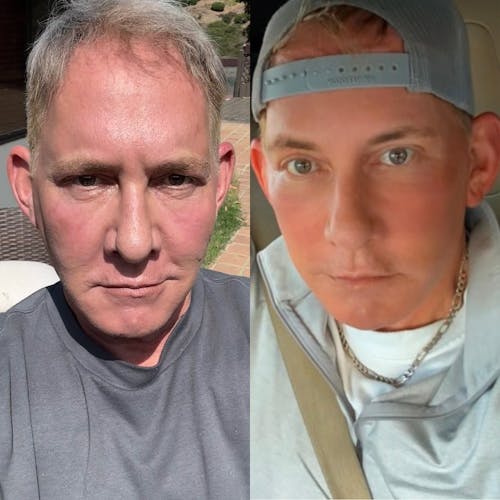
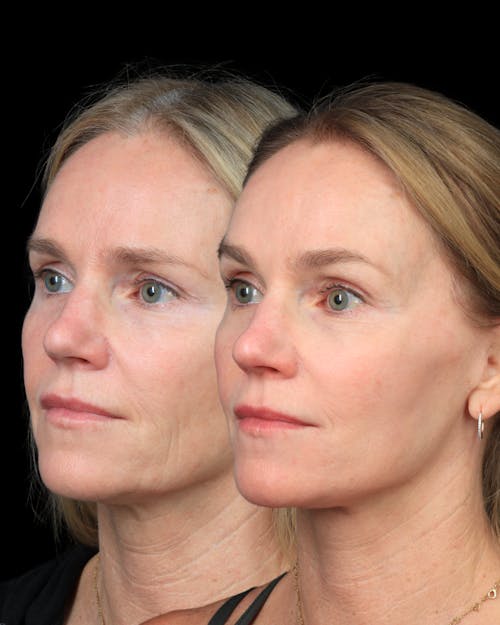
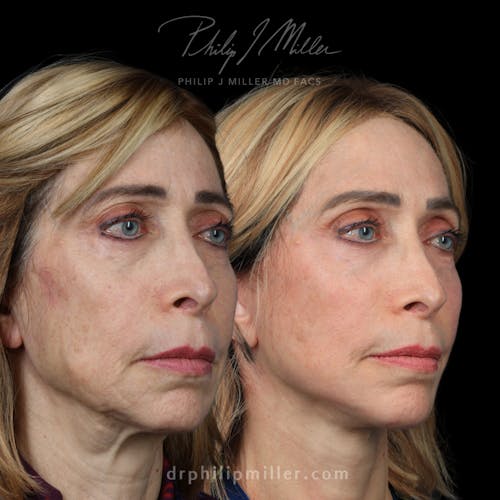
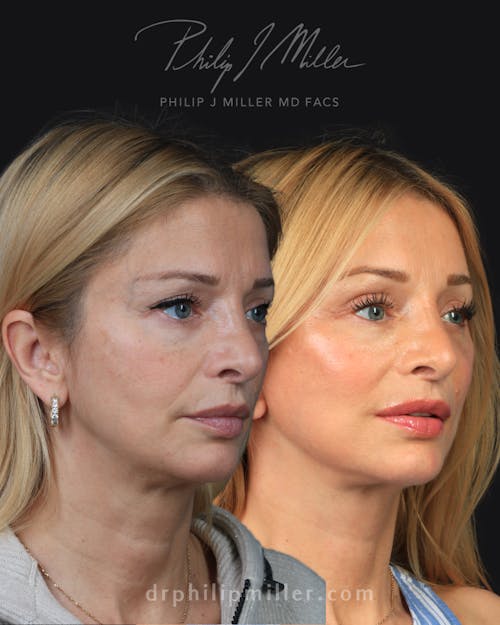
A deep plane facelift results in a cleaner, refined jawline and a younger-looking overall appearance. Under-eye hollows are reduced, as well as deep smile lines. Patients look natural, fresh-faced, and beautiful. Since a deep plane facelift is a more complete correction, results last for up o ten years, and the need for a revisional facelift in the future is reduced.

Is a deep plane facelift right for you?

Candidates for a deep plane facelift normally show advanced signs of aging that can’t be corrected with non-surgical methods. They should also be in good general health and non-smokers. It is important for patients to have realistic expectations about what results to expect. Though Dr. Miller will perform a comprehensive assessment and discuss if a deep plane facelift is right for you, here are some common reasons to pursue this procedure.

  • Your face makes you look older than you feel
  • You have significant skin laxity in the cheek, neck, and jaw area
  • You have marionette lines or wrinkles in the face and neck
Doctor media

Dr. Miller, a cosmetic facial specialist

Dr. Miller is a double-board certified cosmetic plastic surgeon who has focused entirely on cosmetic facial rejuvenation for over 25 years. He believes that the relationship between surgeon and patient should feel like a partnership; his primary goal is to help each patient look their very best.

In addition to being a well-known and esteemed physician, Dr. Miller is a researcher and technical expert in the field. He has presented at numerous conferences worldwide, and is a Clinical Professor at New York University School of Medicine where he serves as the Director of the Facial Plastic Surgery Fellowship Program. Dr. Miller provides uncompromising care and consistently elegant, youthful results. Contact our offices to schedule a consultation with him today!

Deep Plane Facelift FAQ's

How is a deep plane facelift different from a traditional facelift?

What areas of the face can a deep plane facelift improve?

How long does a deep plane facelift procedure take?

Will a deep plane facelift leave visible scars?

How soon can I return to work after a deep plane facelift?

How long do deep plane facelift results last?

Can a deep plane facelift be combined with other facial procedures?

When can I exercise after a deep plane facelift?

Who is a good candidate for a deep plane facelift?

Why is surgeon experience important for a deep plane facelift?

How is a deep plane facelift different from a traditional facelift?

A deep plane facelift repositions the deeper facial tissues and supporting ligaments rather than tightening only the skin or part of the SMAS layer. This approach provides more comprehensive rejuvenation with natural-looking results.

What areas of the face can a deep plane facelift improve?

A deep plane facelift can rejuvenate the cheeks, midface, jawline, neck, and lower face while also softening deep smile lines and restoring youthful facial contours.

How long does a deep plane facelift procedure take?

The surgery typically takes about four hours, although the exact length depends on the extent of correction and whether additional procedures are performed.

Will a deep plane facelift leave visible scars?

Incisions are carefully placed behind the hairline and around the ears to minimize their visibility. As healing progresses, scars generally become less noticeable over time.

How soon can I return to work after a deep plane facelift?

Many patients are able to return to desk work and light social activities approximately one week after surgery, depending on their healing progress.

How long do deep plane facelift results last?

Because the procedure addresses the deeper facial structures, results can last up to 10 years for many patients, making it one of the longest-lasting facelift techniques.

Can a deep plane facelift be combined with other facial procedures?

Yes. Many patients choose to combine a deep plane facelift with other facial rejuvenation procedures to achieve more balanced and comprehensive results based on their aesthetic goals.

When can I exercise after a deep plane facelift?

Light walking is encouraged shortly after surgery to promote circulation, but strenuous exercise should be avoided until your surgeon confirms it is safe to resume normal activities.

Who is a good candidate for a deep plane facelift?

Ideal candidates are healthy, non-smoking adults with moderate to advanced facial aging, including loose skin along the cheeks, jawline, and neck, who want long-lasting facial rejuvenation.

Why is surgeon experience important for a deep plane facelift?

A deep plane facelift requires advanced knowledge of facial anatomy and specialized surgical techniques. Choosing an experienced facial plastic surgeon helps ensure a safe procedure and natural, refined, long-lasting results.

Contact us media
Accessibility: If you are vision-impaired or have some other impairment covered by the Americans with Disabilities Act or a similar law, and you wish to discuss potential accommodations related to using this website, please contact our Accessibility Manager at 504.688.4510.
Contact Us