

Choosing to undergo a facelift is a long-term investment in your appearance, confidence, and facial health. At his New Orleans practice, Dr. Philip J. Miller, MD, FACS, brings more than 25 years of experience and double board certification in Facial Plastic & Reconstructive Surgery and Otolaryngology/Head & Neck Surgery to every procedure he performs. With a career devoted exclusively to the face, Dr. Miller is nationally recognized for producing refined, natural-looking facelift results grounded in surgical precision, deep anatomical understanding, and thoughtful patient planning. Read on to understand how lifestyle choices before and after surgery directly influence the quality, durability, and refinement of facelift results.
Why Lifestyle Matters After a Facelift
A facelift, or rhytidectomy, repositions underlying facial structures to restore youthful contours in the midface, jawline, and neck. While surgical technique establishes the framework for a successful outcome, tissue quality and healing capacity are shaped by long-standing lifestyle habits. Skin elasticity, blood supply, inflammation levels, and collagen health all influence how well results heal and how gracefully they age.
Smoking and Nicotine Use
Nicotine exposure is one of the most significant risk factors affecting facelift healing and outcome quality. Nicotine constricts blood vessels, reducing oxygen delivery to healing tissues and compromising wound integrity.
- Impact on tissue viability: Reduced blood flow can impair skin flap health and slow incision healing.
- Surgical risk considerations: Smoking increases the likelihood of delayed healing and uneven recovery.
- Long-term aging effects: Continued nicotine use accelerates collagen breakdown and facial aging.
Sun Exposure and Skin Protection
Cumulative sun exposure plays a major role in facial aging and directly affects facelift longevity. Ultraviolet damage weakens skin structure over time, diminishing elasticity even after surgical correction.
- Ongoing protection: Daily use of broad-spectrum sunscreen supports smoother, more resilient skin.
- Preservation of contours: Limiting UV exposure helps maintain a refined jawline and neck definition.
- Surgical synergy: Healthier skin responds more predictably to facelift repositioning.
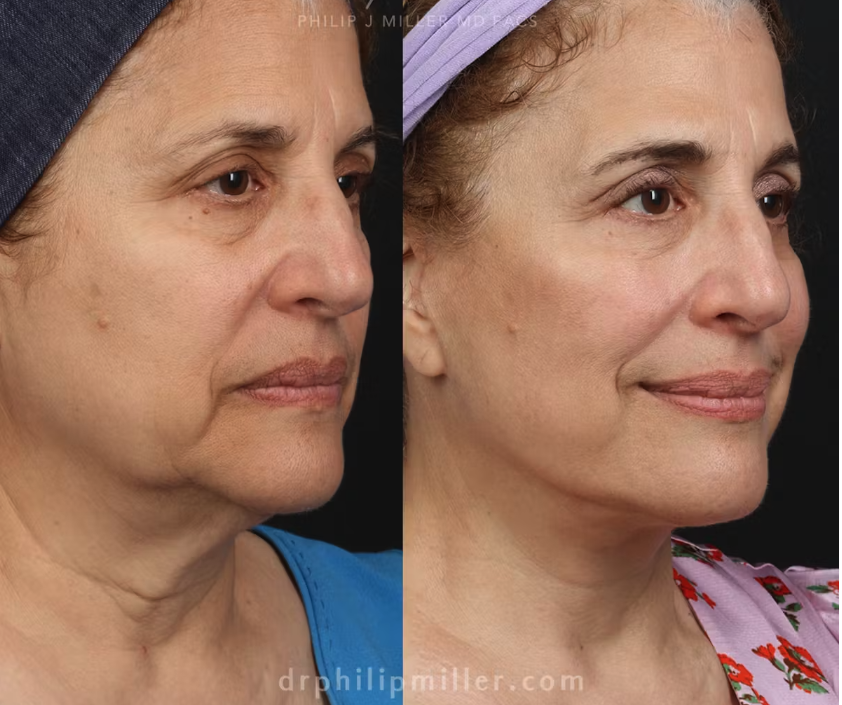
*Real Patient Results
Nutrition and Hydration
Healing after facelift surgery depends on the body’s ability to repair tissue efficiently. Nutrition supports this process at a cellular level.
- Protein intake: Adequate protein supports collagen formation and wound healing.
- Micronutrient balance: Vitamins and antioxidants help regulate inflammation during recovery.
- Hydration support: Proper fluid intake assists circulation and reduces prolonged swelling.
Physical Activity and Stress Management
Overall physical health influences both recovery and long-term facial aging. Circulation, hormone balance, and inflammation are closely tied to activity levels and stress.
- Post-operative pacing: Gradual return to activity protects surgical repairs during early healing.
- Long-term wellness: Regular exercise supports skin tone and vascular health.
- Stress regulation: Chronic stress can accelerate visible aging and impair recovery quality.
Skincare and Maintenance Treatments
A facelift restores structure, but skin quality continues to evolve over time. Thoughtful maintenance reinforces surgical improvements.
- Medical-grade skincare: Professional products support collagen health and skin barrier function.
- Strategic treatments: Non-surgical options may be used selectively to maintain texture and tone.
- Consistent care: Daily habits compound the benefits achieved through surgery.
A Personalized Approach to Lasting Results
Dr. Miller’s facelift planning process accounts for facial anatomy, tissue quality, aging patterns, and lifestyle factors before a surgical approach is selected. Because his practice is devoted exclusively to facial cosmetic and reconstructive surgery, each procedure, from a microlift to a deep plane facelift, is carefully chosen based on how the face has aged and how it is likely to age in the future, ensuring balanced, natural-looking results rather than a one-size-fits-all correction.
Plan Your Facelift with a Facial Plastic Surgery Expert
Lifestyle choices influence both facelift candidacy and long-term outcomes, making early, individualized evaluation essential. Dr. Miller brings decades of expertise in facial specialization and academic leadership to each consultation, helping patients understand how anatomy, lifestyle, and surgical options intersect, enabling informed decisions to be made with confidence. Schedule a personalized facelift consultation today.